Why Choose Weiss Air Conditioning & Plumbing? The Trusted Local Difference
Why Choose Weiss Air Conditioning & Plumbing? The Trusted Local Difference Serving Montgomery County with Honesty and Expertise At a Glance: The Weiss Advantage Local

A small amount of condensation near your outdoor unit is normal, but water pooling inside your home or dripping from your ceiling is a sign of a failed drainage system. Turn off your AC immediately to prevent expensive water damage to your floors and drywall. At Weiss Air Conditioning & Plumbing, we specialize in clearing stubborn clogs and restoring proper drainage to keep your home dry.
In our high-humidity environment, your air conditioner acts as a giant dehumidifier. When that moisture has nowhere to go, it leaks. Here is why:
Clogged Condensate Drain Line: The #1 culprit. Dirt, dust, and organic matter block the pipe, causing water to back up into the indoor unit.
Frozen Evaporator Coil: If your air filter is filthy or your refrigerant is low, the indoor coil can turn into a block of ice. When that ice melts, it overwhelms the drain pan.
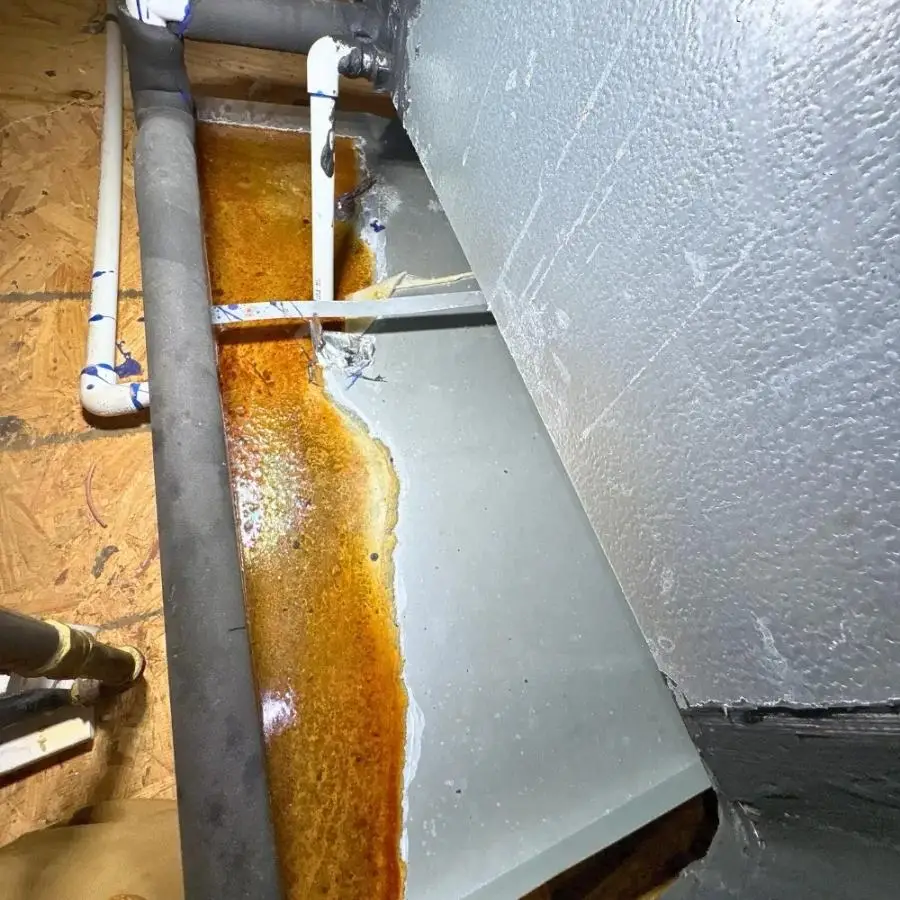
Rusted or Cracked Drain Pan: In older systems, the metal emergency pan can rust through, or the plastic primary pan can crack, letting water bypass the drain entirely.
Improper Leveling: If your house has settled or the unit was installed poorly, the “pitch” of the drain pan might be off, causing water to overflow the low side.
Dirty Air Filter: Restricted airflow causes the coil to drop below freezing. A $15 filter can often prevent a $500 ceiling repair.
If you see water, don’t wait. Follow these steps to minimize damage before our technician pulls into your driveway:
Step 1: Shut it Down. Turn the system to “Off” at the thermostat. This stops the cooling process and prevents more moisture from accumulating.
Step 2: Check the Filter. If it looks like a sweater, throw it away. A clogged filter is the most common cause of a frozen system.
Step 3: Clear the Exit Point. Locate your white PVC drain line outside. If you see a “slug” of algae or dirt at the opening, gently clear it.
Step 4: Contain the Mess. Use towels or a shallow pan. Water damage to baseboards and subfloors happens fast in the Houston heat.
Step 5: Avoid “DIY” Refrigerant. Never attempt to add refrigerant or “poke” a wire into your coils. These require specialized tools and can void your manufacturer’s warranty.
When our technician arrives at your home in Conroe or the surrounding areas, we don’t just “patch” the problem. We follow a professional diagnostic process to ensure the water stays where it belongs, outside. Here is what we do:
Inspect and Clear the Condensate Drain Line: We don’t just look at the line; we use professional tools to flush out the algae and debris that cause 90% of local backups.
Check for Refrigerant Issues or Frozen Coils: Water is often just a symptom of a deeper cooling problem. We verify your refrigerant levels to ensure your coils aren’t turning into ice blocks.
Repair or Replace a Damaged Drain Pan: Whether your primary pan is cracked or your emergency secondary pan is rusted through, we ensure your system’s “safety net” is watertight.
Ensure Your Unit is Level and Draining Properly: A house that has shifted even slightly can cause a unit to tilt. We re-level your system to ensure gravity works with your drainage, not against it.
Perform a Full System Check to Prevent Future Leaks: We inspect your safety float switches and overall system health to catch the next leak before it starts.
A leaking AC is a cry for help from your HVAC system. Quick action today can save you from a mold remediation bill tomorrow. Whether it’s a simple clog or a cracked pan, the experts at Weiss are here to provide a permanent solution.
“Don’t Think Twice, Call Weiss.”

Why Choose Weiss Air Conditioning & Plumbing? The Trusted Local Difference Serving Montgomery County with Honesty and Expertise At a Glance: The Weiss Advantage Local

Should You Repair or Replace Your Air Conditioner in Montgomery, TX? Should You Repair or Replace Your AC Unit? With our extreme humidity and triple-digit