

Garbage Disposal Repair in Willis, TX
What Not to Put Down the Drain
Garbage disposals fail because of what goes into them — and summer season is when the worst offenders show up in bulk. Corn husks wrap around the flywheel and seize the motor. Hot grease solidifies in the pipes. Potato skins turn into paste. Watermelon rinds crack the impellers. Know what to keep out of the drain, and you’ll avoid the most common reason Willis, TX homeowners call for garbage disposal repair mid-party.
Why Summer Is the Hardest Season on Your Kitchen Plumbing in Willis, TX
Summer is built for backyard cookouts, block parties, and family gatherings. But while you’re smoking brisket or prepping side dishes, your kitchen plumbing is quietly facing its most stressful season of the year.
With kids home from school and guests cycling through the kitchen all weekend, your sink handles a significant influx of food waste. The problem isn’t volume, it’s what goes in. Treating your garbage disposal like a trash can is the fastest way to derail a summer party with a backed-up, overflowing sink.
Here’s what’s actually happening inside the unit, why certain foods cause so much damage, and what to do if your disposal stops working during your event.
How a Garbage Disposal Actually Works
Before getting into what damages a disposal, it helps to understand what the unit is actually designed to do — because most homeowners have it wrong.
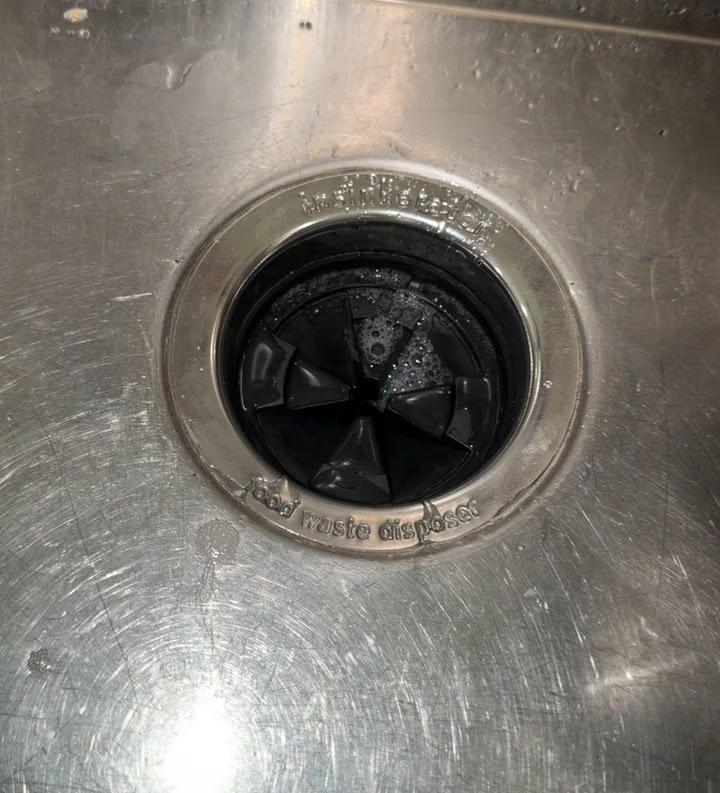
Despite popular belief, garbage disposals don’t use sharp spinning blades. They use small, blunt metal impellers that spin on a flywheel and fling food waste against a stationary shredder ring on the inside wall of the unit. The shredder ring grinds the food into fine particles that wash down the drain with water.
That system works well for soft food scraps. It does not work for fibrous materials that wrap instead of grind, starchy foods that turn to paste, fats that solidify in the pipes downstream, or hard materials that the impellers simply can’t break down.
Fibrous Materials: The Motor Killers
Corn on the cob is a staple, but the husks and silks that come with it are among the worst things you can put near your disposal.
The impellers are designed to fling food against the shredder ring. Fibrous strings, from corn husks, corn silk, celery, onion skins, and artichoke leaves, don’t grind down when they hit the ring. Instead, they wrap tightly around the impellers and the central flywheel, binding the rotation until the motor stalls.
When this happens, the disposal will hum but won’t spin. Left running, it trips the thermal overload and shuts down entirely. The fix is a manual reset, but if the wrapping is severe enough, the flywheel has to be manually freed before the unit will run again.
Keep all fibrous scraps out of the disposal entirely. A compost bin or trash can next to the prep station makes this easy during a cookout.
Cooking Fats, Oils, and Grease: The Pipe Blockers
When you’re cleaning a griddle, draining bacon grease, or wiping down a brisket prep tray, pouring that liquid fat down the drain with hot water feels harmless. It isn’t.
Hot grease flows easily past the disposal and into your drain line — but the moment it hits the cooler pipes further downstream, it solidifies. That waxy buildup accumulates with every pour. Over time it narrows the pipe, catches passing food particles, and eventually creates a complete blockage that no amount of hot water will clear.
In Willis, TX homes, this type of blockage typically affects the kitchen drain trap and the horizontal drain line running to the main stack. By the time the sink stops draining entirely, the buildup has usually been accumulating for weeks. Clearing it requires professional drain service — not a bottle of drain cleaner.
The right approach: let grease cool in the pan, pour it into a sealable container, and throw it away. If you’re cooking for a crowd, have a dedicated grease jar on the counter.
Starches: The Paste Problem
Potato salad prep, pasta salad leftovers, rice — starchy foods are everywhere at summer gatherings, and they’re consistently one of the top causes of slow drains and kitchen sink backups.
When starchy food is ground up with water, it doesn’t break down into small particles the way soft vegetable scraps do. It turns into a thick, glue-like paste. That paste coats the interior walls of your drain pipe, gradually narrowing the opening and catching everything else that passes through. What starts as a slow drain becomes a stopped drain faster than most homeowners expect.
Keep potato skins, pasta, rice, and starchy vegetable scraps out of the disposal. Peel potatoes directly into a trash bag. Scrape bowls into the trash before rinsing in the sink.
Hard Materials: Rinds, Bones, and Pits
Watermelon rinds, peach pits, T-bones, and similar hard materials aren’t going to clog your pipes the way grease does, they’re going to break the disposal itself.
Standard residential garbage disposals are designed for soft food scraps. Hard materials like rinds, pits, and bones exceed what the impellers and shredder ring can handle. The result is cracked impellers, a damaged hopper chamber, or a burned-out motor. Any of those outcomes means replacement, not repair.
If a guest drops something hard into the disposal accidentally, turn the unit off before running it. A manual inspection with a flashlight, never a hand, can confirm whether anything is lodged in the unit before you attempt to run it again.
When to Call Weiss Air Conditioning & Plumbing for Garbage Disposal Repair in Willis, TX
Some disposal problems can be resolved, others require a licensed plumber. Call Weiss Air Conditioning & Plumbing if:
- The disposal hums but won’t spin even after manually freeing the flywheel and resetting the unit
- There is active leaking from the unit, the sink flange, or the drain connections under the cabinet
- Your double kitchen sink is backing up on both sides
- The unit is making grinding or rattling noises that indicate internal component damage
- The disposal is older than 10 years and failing repeatedly
Weiss Air Conditioning & Plumbing provides garbage disposal repair and replacement throughout Willis, TX and Montgomery County, TX. If the unit is beyond repair, we can install a heavy-duty replacement designed for busy family kitchens — quietly and correctly, without the shortcuts.
Don’t Think Twice, Call Weiss.
Stay Connected With Us!
Other Blog Posts

When to Turn On Your Heater in Montgomery County, TX
Not sure when to switch from AC to heat in Montgomery County? Here’s the temperature to watch for, what to check first, and when to call Weiss.
Why Fall Maintenance Is Essential for Your HVAC
Learn why October through January is the prime window for fall HVAC preventative maintenance in Montgomery County TX.