
Tankless vs. Traditional Water Heater: Which is Right for Your Family?
Tankless vs. Traditional Water Heater: The Ultimate Homeowner’s Guide
At a Glance: Which Water Heater Fits Your Home?
- Traditional Water Heater: Reliable, lower upfront cost, but limited hot water supply and constant “standby” energy waste.
- Tankless Water Heater: Unlimited hot water, 20+ year lifespan, and massive space savings, but requires a higher initial investment.
- The Verdict: Large families in Magnolia benefit most from Tankless efficiency, while Traditional Tanks remain a solid, budget-conscious choice for quick replacements.
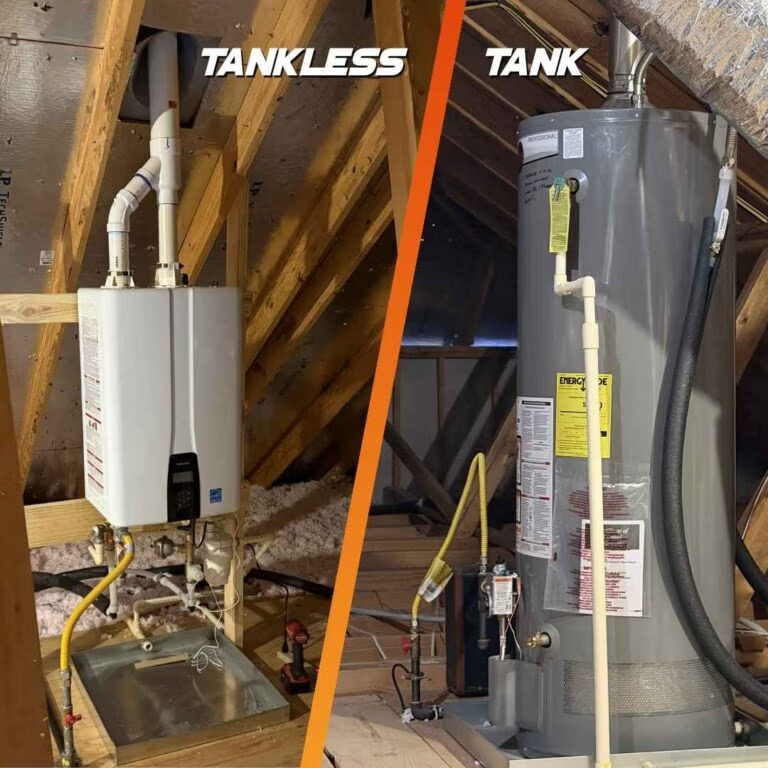
You probably don’t think about your water heater until the moment you step into a shockingly cold shower. But whether you’re building a new home, replacing an aging unit, or just doing your homework, the choice between a traditional tank water heater and a tankless water heater is worth understanding. The two technologies differ significantly in cost, efficiency, lifespan, and everyday performance.
Here’s a comprehensive look at both — so you can make a decision you won’t regret.
How They Work: The Science of Your Hot Water
The Traditional Tank: The “Hot Kettle”
Think of a traditional heater like a giant tea kettle that stays on all day.
The Process: When you turn on the hot water, old water enters the tank to refill it. An electric element or gas burner at the base heats that water to your set temperature (usually 120°F).
The Storage: The tank is heavily insulated to keep that water hot. When you turn on a faucet, the hot water is drawn from the top of the tank and sent to your shower.
The Efficiency Gap: Because the tank is constantly fighting to keep 50 gallons of water hot in a cold garage or attic, it cycles on and off repeatedly—even if you haven’t touched a faucet in hours. This is energy you pay for but never actually use.
The Tankless System: The “Flash Heater”
A tankless unit is a high-tech heat exchanger that senses a demand for water.
The Activation: When you turn on a hot water tap, a flow sensor detects the movement of water. This triggers the unit to ignite the gas burner or activate the electric coils.
The Heat Exchanger: The cold water travels through a series of copper or stainless steel pipes called a heat exchanger. A powerful burner blasts these pipes with heat instantly.
Infinite Supply: By the time the water travels through those few inches of heated coils, it has jumped to your desired temperature. As long as water is flowing, the unit keeps heating. It never “runs out” because it isn’t pulling from a finite bucket.
Key Differences: Hot Water Supply, Efficiency, and Lifespan
Energy Efficiency
Traditional tanks heat water 24/7 to keep 30 to 80 gallons ready, which leads to “standby” energy waste even when you aren’t home. Tankless systems are the “on-demand” alternative; they only ignite when you turn on a tap, which can lower your monthly utility footprint and save up to 30% on energy costs.
Long Term Cost
While a traditional tank has a lower upfront installation cost, it typically only lasts 8 to 12 years before needing a replacement. A tankless unit requires a higher initial investment, but it is built for long-term performance with a lifespan of 20+ years. Over time, the energy savings and doubled lifespan often allow the tankless unit to pay for itself.
Hot Water Supply
A traditional tank provides a reliable but limited supply; once those 30 to 80 gallons are gone, the system must refill and reheat, often leaving the last person with a cold shower. Tankless units provide an infinite supply of hot water. Because they flash-heat water as it flows through the pipes, you get endless hot water that never runs out.
Space Requirements
Traditional water heaters are large floor units that take up roughly 9 square feet of space in a garage, closet, or attic. Tankless units are about the size of a small suitcase and mount directly to the wall. This compact design is ideal for homeowners looking to reclaim floor “real estate” for storage, gyms, or workshops.
Maintenance
Because of the hard water in Montgomery County, both systems need attention to ensure reliability. In traditional tanks, sediment settles at the bottom and can eventually corrode the metal, leading to leaks. Tankless systems don’t store water, so they avoid that specific sediment buildup, but they do require a simple annual flush to keep the heat exchanger clear of scale and performing at its best.
Quick Comparison of the Pros and Cons
| Feature | Tank Water Heater | Tankless Water Heater |
|---|---|---|
| Hot Water Supply | Limited to storage tank size | Continuous on demand |
| Energy Efficiency | Moderate (standby loss) | High (heats only as needed) |
| Installation Cost | Lower upfront cost | Higher initial investment |
| Average Lifespan | 8–12 years with proper maintenance | 15–20+ years with routine descaling |
| Space Required | Requires floor space | Compact wall-mounted |
| Maintenance | Periodic tank flushing | Annual descaling |
| Best For | Moderate hot water demand / Budgets | Multiple bathrooms / High usage |
| Popular Brands | Rheem, Bradford White, AO Smith | Navien, Rinnai |
The Verdict: Which One Should You Choose?
Choose a Traditional Water Heater if:
You need a fast, budget-friendly replacement for an existing unit.
You have a smaller household with low simultaneous water demand.
Your home is already piped for a specific tank size and you want the simplest installation.
Choose a Tankless Water Heater Unit if:
You have a large family or a high-capacity “soaker” tub.
You want to lower your monthly utility footprint.
You plan on being in your home for 5 or more years (the energy savings and lifespan eventually pay for the unit).
If you’re unsure, a licensed plumber can assess your home’s specific needs and recommend the right size and type for your situation.
Experience the Weiss Difference
At Weiss Air Conditioning & Plumbing, we believe every home is different. There is no one size fits all solution for your hot water. We provide tailored options, clear pricing, and the honest advice you need to choose what works best for your family.
Whether it is a quick tank swap or a precision tankless conversion, we build every installation for long term performance and reliability.
Don’t Think Twice Call Weiss.
Stay Connected With Us!
Other Blog Posts
Why Homeowners Switch to Weiss Air Conditioning and Plumbing Instead of Large HVAC Chains
See why Montgomery County homeowners choose Weiss Air Conditioning & Plumbing after comparing large HVAC chains on service, communication, and trust.
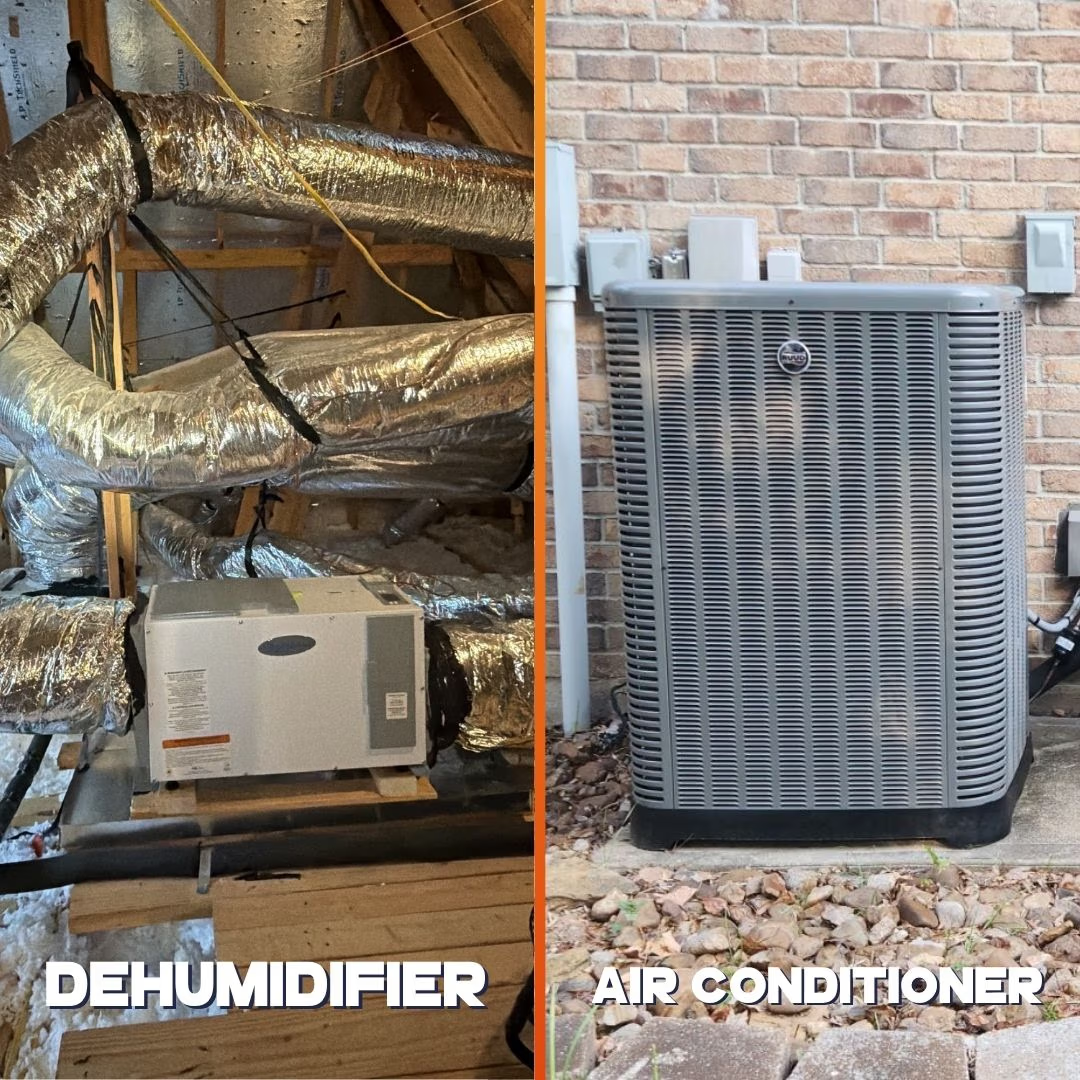
Dehumidifier vs. Air Conditioner: Understanding the Difference
Struggling with humid indoor air? Learn how dehumidifiers and air conditioners work differently to keep your home comfortable and energy-efficient.